
Taking a 2023 website off the internet without breaking the 2026 one
An old version of the Virtual Assistants Agency site was still reachable alongside the new one, with retired prices, a retired phone number and a working checkout for an offer that no longer exists. AI search engines could quote all of it. Here's how it came down in six approved steps, with no page deleted.
The risk was real. It just wasn't where we expected.
The brief said the 2023 site was still published on virtualassistantsagency.com, with retired prices and live checkout buttons. A read-only inventory came first, covering every listed path and every website and funnel in the account. It showed the main domain had mostly been cleaned up already. The real exposure had moved to places nobody was looking.
Already handled
- The old main-domain pages, including both checkout pages, were already unpublished and 301-redirected
- The homepage and the AI assistant's booking link were correct
Still live and findable
- A subdomain funnel with a working order form charging $797 and $400 for the retired staffing offer
- A second subdomain with a "40% off" promotion and a retired phone number
- Two old booking pages with retired copy
- 25 old pages still published on a second website
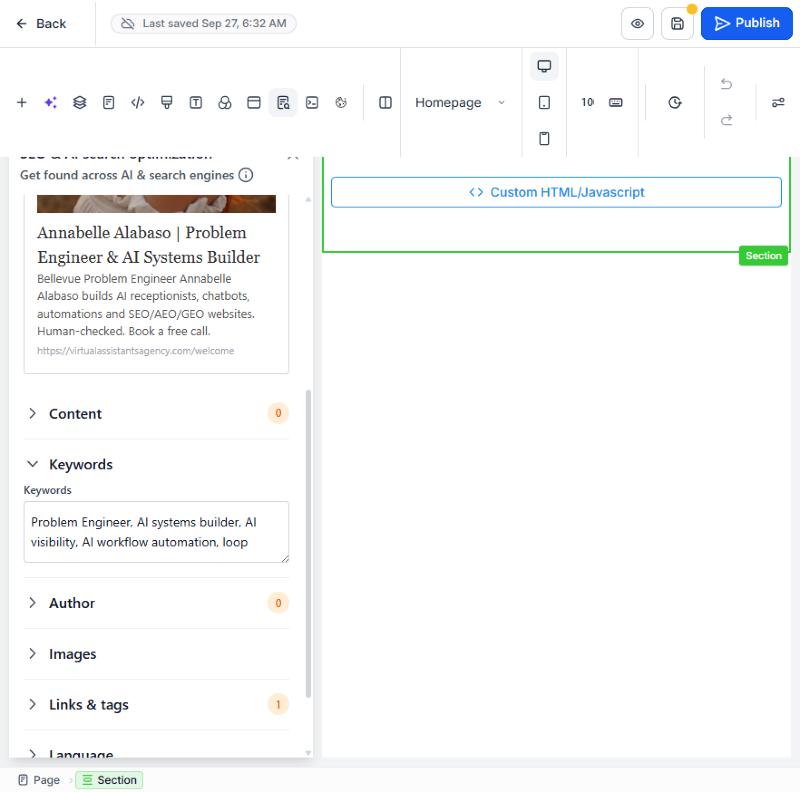
- An empty sitemap, and homepage meta keywords naming terms not on the page
For a business that helps clients show up in AI search, this mattered twice over. ChatGPT, Perplexity and Bing Copilot can quote any public page, and they had two conflicting versions of the business to choose from.
A human approves every live change
An AI assistant (Claude) did the work inside the website platform. I set the rules first:
Six steps, in order
Inventory (read only)
Every path was traced to its website or funnel and tested from outside, recording the first response code and the final page. That's how the live subdomains turned up.
Stop the money
The live checkout on the subdomain was taken down first. The retired products were checked for active subscriptions or payment links, found unused, and later deleted.
Remove the old site
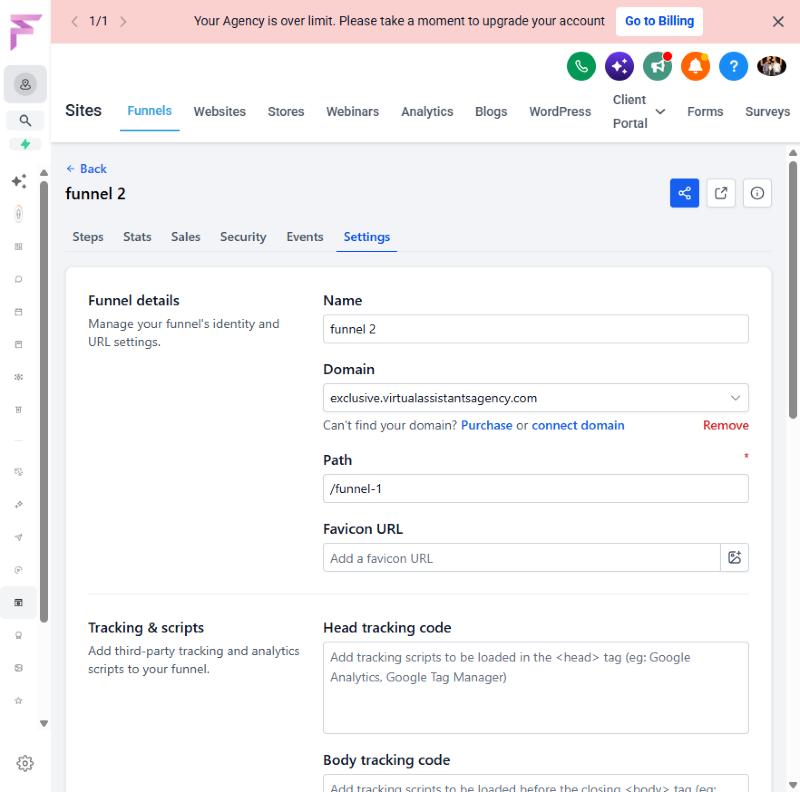
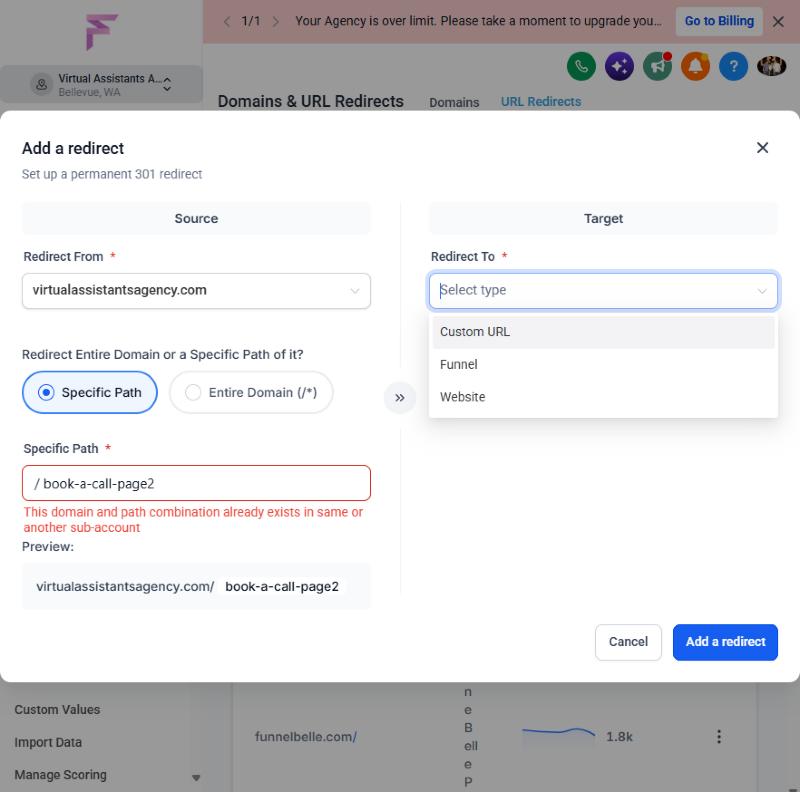
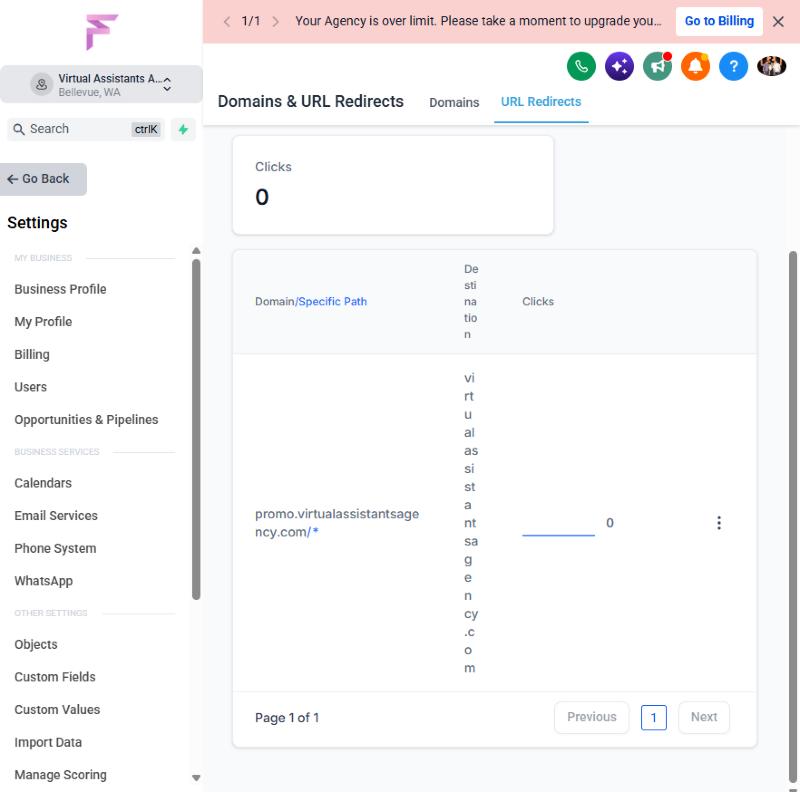
The booking pages were unpublished with a 301 to the live booking section. Both subdomains were removed from their funnels and given whole-domain 301 redirects. All 25 old pages on the second website were unpublished.
Regenerate the sitemap
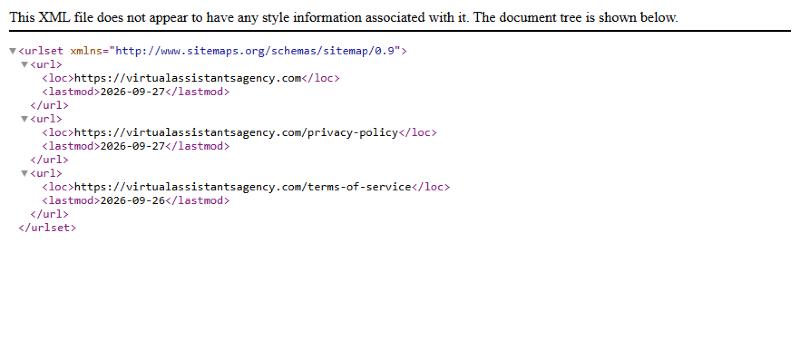
The empty sitemap now lists only the three live pages: the homepage, the privacy policy and the terms.
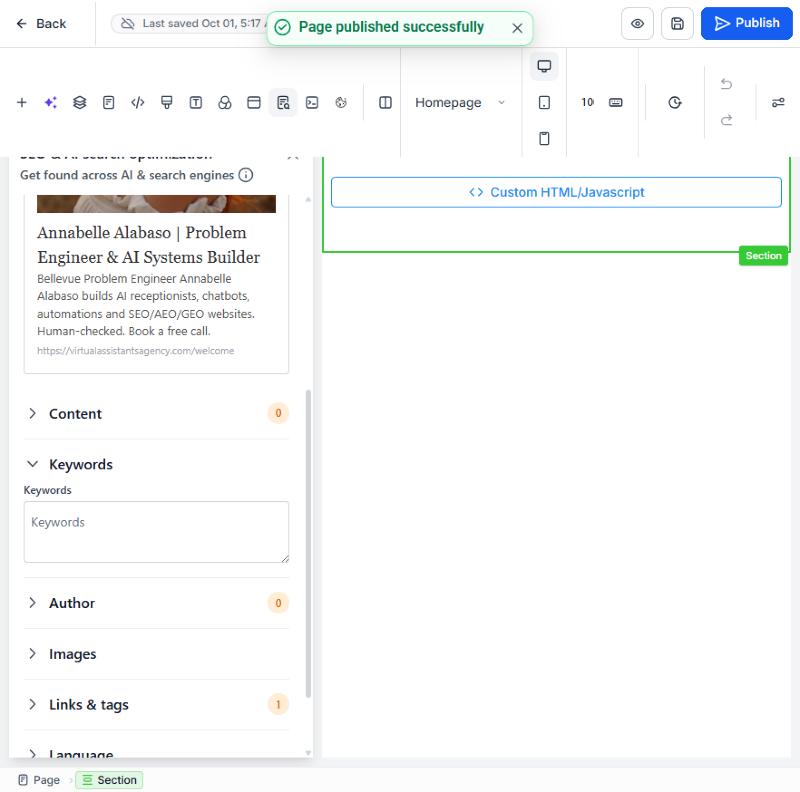
Remove the meta keywords
Only the keywords were cleared. The title, description, social image and canonical URL stayed exactly as they were, and a live check confirmed it.
Check everything (read only)
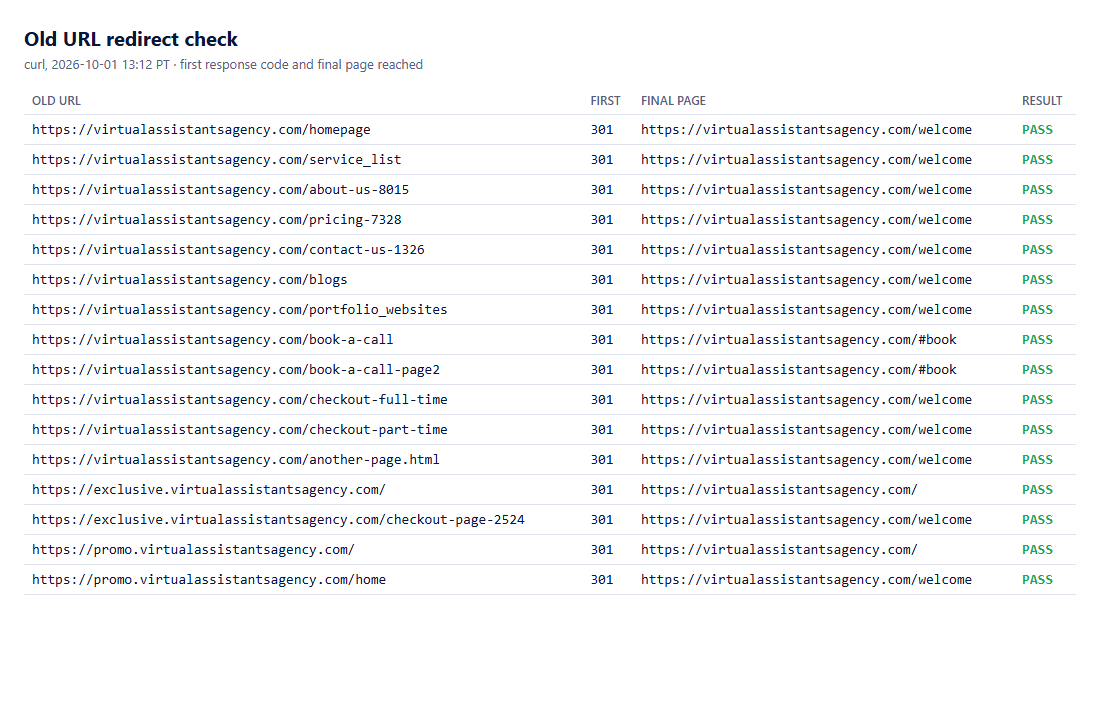
robots.txt blocks no crawler, including Bingbot, OAI-SearchBot and GPTBot. The structured data was reviewed. All 16 old URLs were requested again and followed to their final page.
Final report
| Item | Before | After | Result |
|---|---|---|---|
| Subdomain checkout funnel | Live order form charging $797 and $400 | Domain removed; whole-domain 301 to the main site | PASS |
| Subdomain promo funnel | Live "40% off" page, retired phone number | Domain removed; whole-domain 301 to the main site | PASS |
| Two old booking pages | Live, retired copy | Unpublished; 301 to the live booking section | PASS |
| Second website (25 pages) | Published | All unpublished, none deleted | PASS |
| Main-domain old pages and checkouts | Already redirected (earlier cleanup) | Re-verified | PASS |
| Sitemap | Empty | Three live pages | PASS |
| Homepage meta keywords | 7 terms, several not on the page | Removed; nothing else changed | PASS |
| robots.txt | Not checked | Blocks no crawler | PASS |
| Retired VA products | Active | Checked for use, then deleted | PASS |
| All 16 old URLs, retested | Old content in four places | Every one returns 301 and ends on the current site | PASS |
What couldn't be done as planned
A redirect can't sit on a published page
The platform refused a redirect on any path a live page still used. The fix stayed inside the platform: its unpublish dialog has a redirect option that produces the same 301.
Some steps need a human
Removing a funnel's domain and deleting products are guarded steps. The assistant's safety controls stopped it, so I did those clicks myself, and the assistant checked the result.
What this shows
Inventory before you fix
The brief pointed at pages that were already redirected. The live checkout was on a subdomain nobody mentioned. A read-only pass found it before anything changed.
Redirect, don't delete
A 301 keeps every old link and bookmark working and sends it to the current answer. Unpublishing keeps the work recoverable.
AI is fast. A human stays accountable.
The assistant did the clicking and the checking. Every live change waited for my yes, and the most guarded steps were mine.
Before and after

Is an old version of your business still out there?
Old pages, old prices and old phone numbers keep getting quoted by Google and AI assistants until someone finds them. Book a free 30-minute call and we'll look for yours together.